Later Alligator: A Practical Review for Embroidery Projects
As a designer who spends more time staring at stitch maps than actual fabric, I have learned that the difference between a cute idea and a sellable product often comes down to execution. When I first pulled up the Later Alligator Embroidery Design, my initial reaction was one of cautious optimism. The concept is undeniably charming, fitting neatly into the popular Animal Quotes category, but charm alone does not survive the needle. I needed to know if this design held up under the mechanical stress of a high-speed machine and the critical eye of a paying customer.
First Impressions and Visual Personality
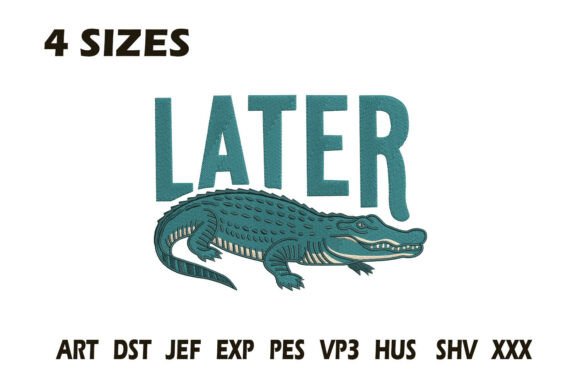
The visual personality of this design is playful and whimsical, which is exactly what you want when targeting the gift market or creating lighthearted home decor. The layout balances text and imagery in a way that feels organic rather than forced. In many poorly designed files, the typography fights with the graphic element, resulting in a cluttered look. Here, the alligator motif complements the phrase, creating a cohesive unit that reads well from a distance.
For embroidery designers and Etsy sellers, this balance is crucial. A machine embroidery design must be legible instantly. Whether it is on a tote bag design hanging in a boutique window or a sweatshirt embroidery seen across a crowded room, the message needs to land immediately. The clean lines and distinct shapes in this file suggest that it will maintain its integrity even after multiple washes, provided the stitching parameters are respected.
Real-World Application: The Tote Bag Test
To truly evaluate the utility of this embroidery file, I simulated a real-life production scenario. I decided to use it for a custom personalized gift project: a set of canvas tote bags for a local bookstore’s summer reading program. This context is perfect for the "Later Alligator" theme, appealing to both children and adults who appreciate a bit of wordplay.
Stitching onto canvas requires attention to stitch density. If the design is too dense, the fabric puckers; if it is too light, the background shows through. During the test run, I observed how the fill stitch areas interacted with the textured weave of the cotton canvas. The design performed admirably, covering the fabric without causing excessive pull. However, I noticed that the finer details of the alligator’s expression relied heavily on precise tension settings. This is a reminder that while the digital file is solid, the operator’s skill remains a variable.
Versatility Across Product Lines
Beyond totes, this design shows promise in several other areas of commercial embroidery:
- Custom Apparel: It works well on t-shirts and hoodies, especially when placed on the upper left chest or as a larger back print.
- Home Decor: Ideal for kitchen towels and pillow covers, adding a touch of humor to everyday items.
- Baby Items: The whimsical nature makes it suitable for baby embroidery on onesies or burp cloths, though care must be taken with thread softness.
- Holiday Gifts: It serves as a fun accent for end-of-year gifts or farewell presents, leveraging the pun effectively.
For small shop product lines, having a versatile asset like this allows for consistent branding across different mediums. You can use the same design assets for a printable mockup on your website and then produce the physical finished product with confidence that the result will match the preview.
Technical Considerations and Pitfalls
While the design is robust, it is not without its challenges. Experienced crafters know that certain fabrics and hoops demand extra scrutiny. Here are specific scenarios where you should proceed with caution:
- Small Hoop Sizes: If you are working with a 4x4 inch hoop, ensure the design fits comfortably within the safe zone. Crowding the edges can lead to hoop burns or skipped stitches.
- Stretchy Fabrics: On knit fabrics like jersey t-shirts, the running stitch outlines must be secure. Without proper stabilization, the design may distort over time.
- Dark Fabrics: When stitching on black or navy materials, check your thread colors for contrast. You may need to add an underlay or adjust the color palette to ensure the alligator does not disappear into the background.
- Curved Surfaces: Applying this to caps or hats requires careful hooping. The curvature can stretch the design, so testing on a similar curved surface is essential before committing to client orders.
Another critical factor is the stabilizer choice. For lightweight fabrics, a cut-away stabilizer might be necessary to support the weight of the stitches, whereas a tear-away could suffice for sturdy denim or canvas. Always test on scrap fabric first. This simple step saves money and reputation by preventing ruined garments.
Enhancing Brand Value and Customer Trust
From a business perspective, the quality of your digital embroidery file directly impacts perceived value. A clean, well-digitized design signals professionalism. When customers receive a handmade product with crisp edges and no loose threads, their trust in your brand grows. The Later Alligator Embroidery Design contributes to this perception by offering a polished look that requires minimal post-production cleanup.
For craft business owners, consistency is key. Using reliable designs allows you to scale your production without sacrificing quality. Whether you are creating an embroidered patch for a local club or a series of aprons for a cooking class, the reliability of the stitch path ensures that each item meets your standards. This consistency builds buyer engagement and encourages repeat purchases.
Final Designer Notes
Before integrating this design into your workflow, consider these practical steps:
- Check Licensing: Confirm whether the license allows for commercial use if you plan to sell finished items. Never assume; always verify.
- Review Stitch Density: Look at the stitch count relative to the size. High density on thin fabric can cause perforation.
- Test Color Combinations: Try different thread colors to see what best highlights the playful nature of the alligator. Sometimes a non-traditional color scheme can make the design stand out more.
- Inspect Small Details: Zoom in on the digitizing software to check for unnecessary jumps or trims that might slow down production.
In conclusion, the Later Alligator Embroidery Design is a strong contender for any designer’s library. It balances fun aesthetics with technical feasibility, making it suitable for a wide range of embroidery projects. By respecting the material constraints and following best practices for stabilization and thread selection, you can transform this digital asset into a high-value physical product that delights customers and strengthens your brand.